
Gravitational constant
Fundamental constant quantifying gravitational force strength.

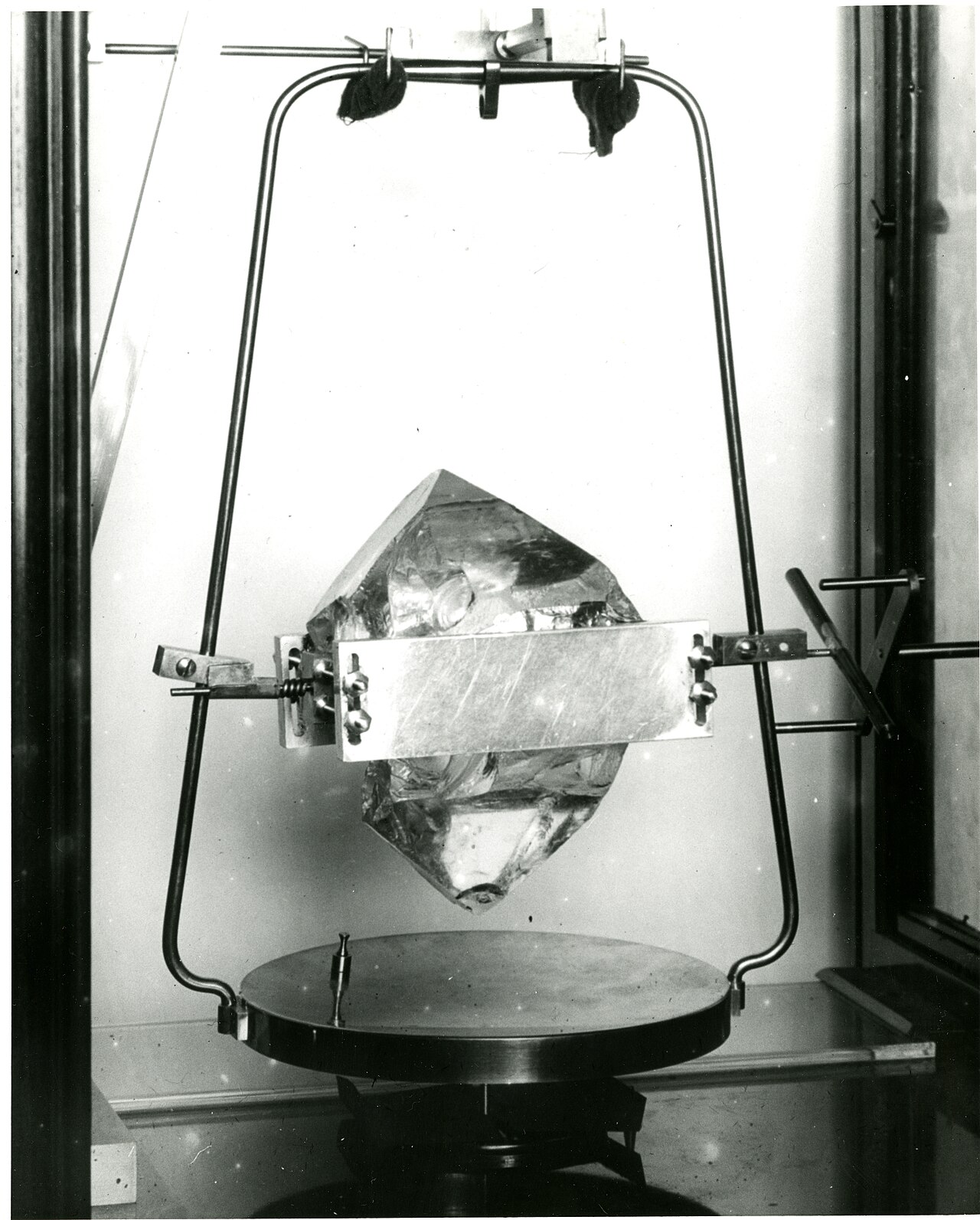
National Institute of Standards and Technology · Public domain
The gravitational constant is an empirical physical constant that gives the strength of the gravitational field induced by a mass. It is involved in the calculation of gravitational effects in Isaac Newton's law of universal gravitation and in Albert Einstein's theory of general relativity. It is also known as the universal gravitational constant, the Newtonian constant of gravitation, or the Cavendish gravitational constant, denoted by the capital letter G.
- symbol
- G
- relative standard uncertainty
- 2.2×10⁻⁵
- modern notation introduced
- C. V. Boys, 1890s
- related constant
- Einstein gravitational constant κ = 8πG/c⁴
Lore & Background
In Newton's law of universal gravitation, the gravitational constant G is the proportionality constant connecting the gravitational force between two bodies with the product of their masses and the inverse square of their distance. The modern notation of Newton's law involving G was introduced in the 1890s by C. V. Boys.
Reader's Guide
The gravitational constant is a fundamental physical constant that appears in both Newton's law of universal gravitation and Einstein's field equations of general relativity. In Newton's law, it relates the gravitational force between two masses to their product and the inverse square of their distance. In general relativity, it quantifies the relation between the geometry of spacetime and the stress–energy tensor. The constant is difficult to measure with high accuracy because the gravitational force is extremely weak compared to other fundamental forces at the laboratory scale. Its measured value is known with some certainty to four significant digits. The gravitational constant is also used in natural unit systems such as Planck units and Stoney units, where it often takes a value of 1 or close to it. In astrophysics, it is expressed in units convenient for orbital mechanics, such as parsecs and solar masses.
Did You Know?
- The gravitational constant is also called 'Big G' to distinguish it from 'small g', the local gravitational field of Earth.
- The modern notation of Newton's law involving G was introduced in the 1890s by C. V. Boys.
- The Einstein gravitational constant κ is related to G by κ = 8πG/c⁴.
Dual Role in Classical and Relativistic Physics
The gravitational constant, commonly denoted by the capital letter G, occupies a uniquely central position in two of the most important frameworks in physics. In Isaac Newton's law of universal gravitation, G serves as the proportionality factor that links the attractive force between two spherically symmetric bodies to the product of their masses divided by the square of the distance separating their centres of mass. In Albert Einstein's general relativity, the same constant appears within the Einstein field equations, where it quantifies how the curvature of spacetime relates to the distribution of matter and energy described by the stress–energy tensor. Because of this dual appearance, the constant carries several names: the universal gravitational constant, the Newtonian constant of gravitation, and the Cavendish gravitational constant. It is also mathematically relatable to, yet distinct from, the Einstein gravitational constant denoted by lowercase kappa, which Einstein himself originally introduced. This bridging role makes G one of the few constants that connects the everyday experience of falling objects to the deep geometry of the cosmos.
The Challenge of Measurement
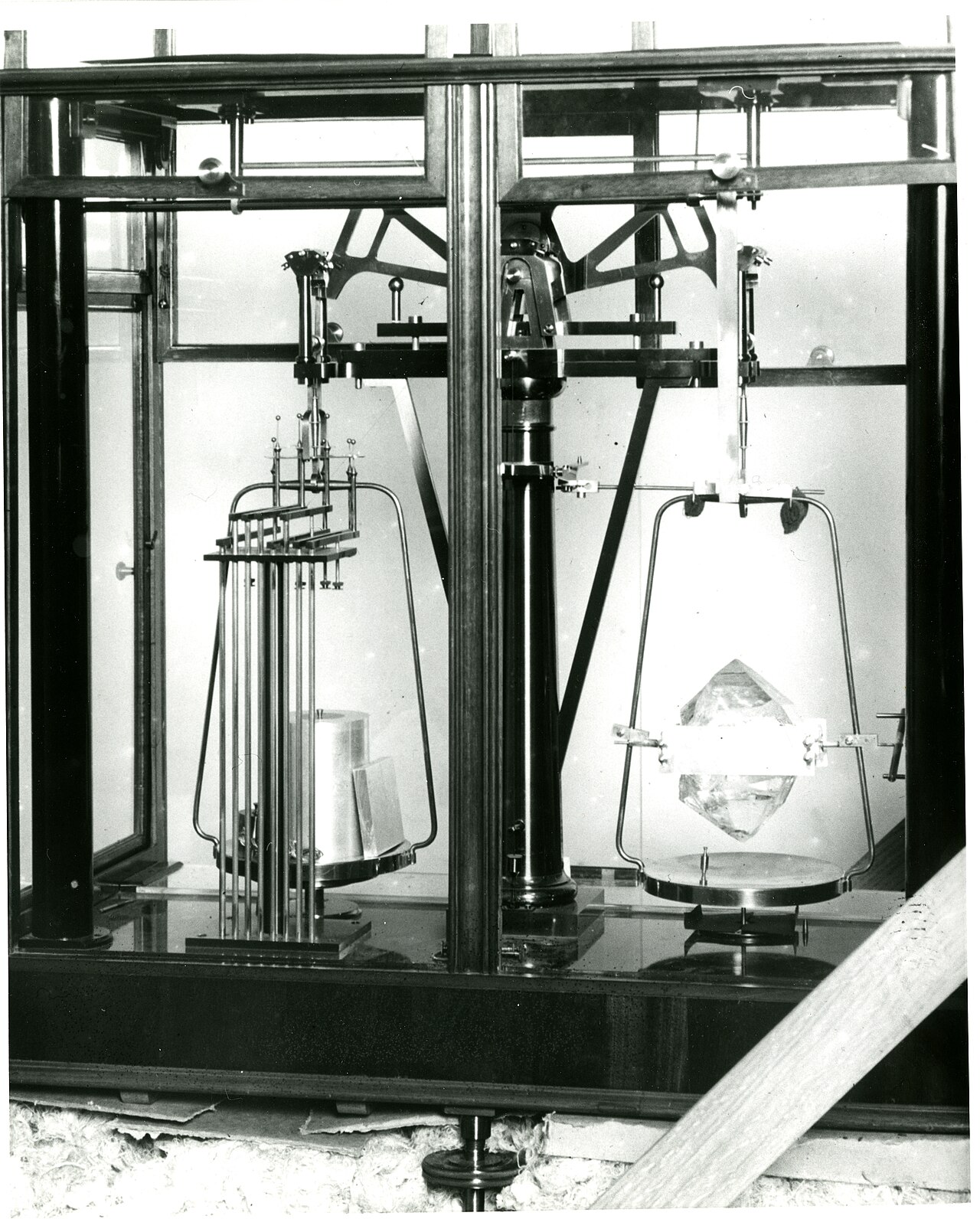
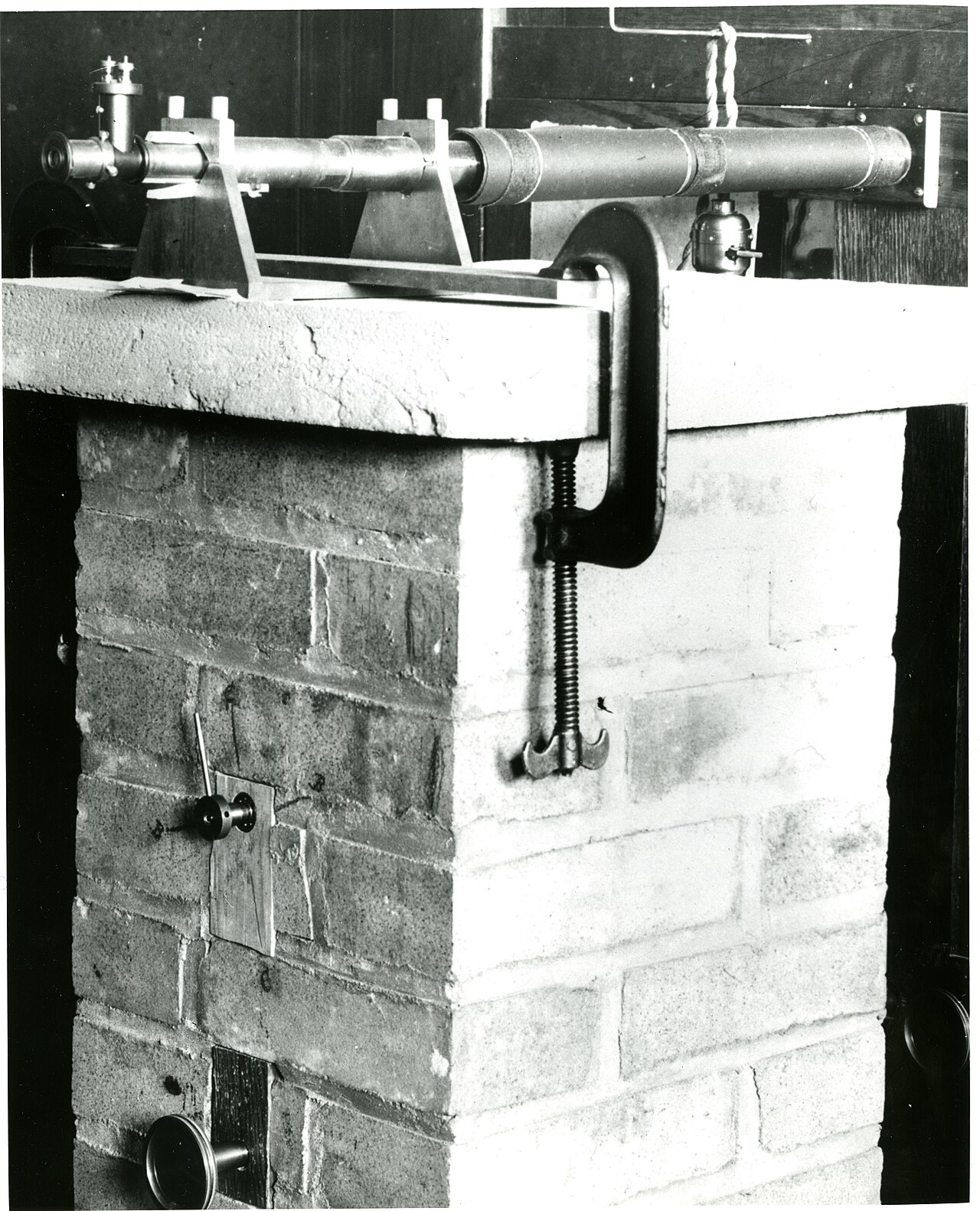
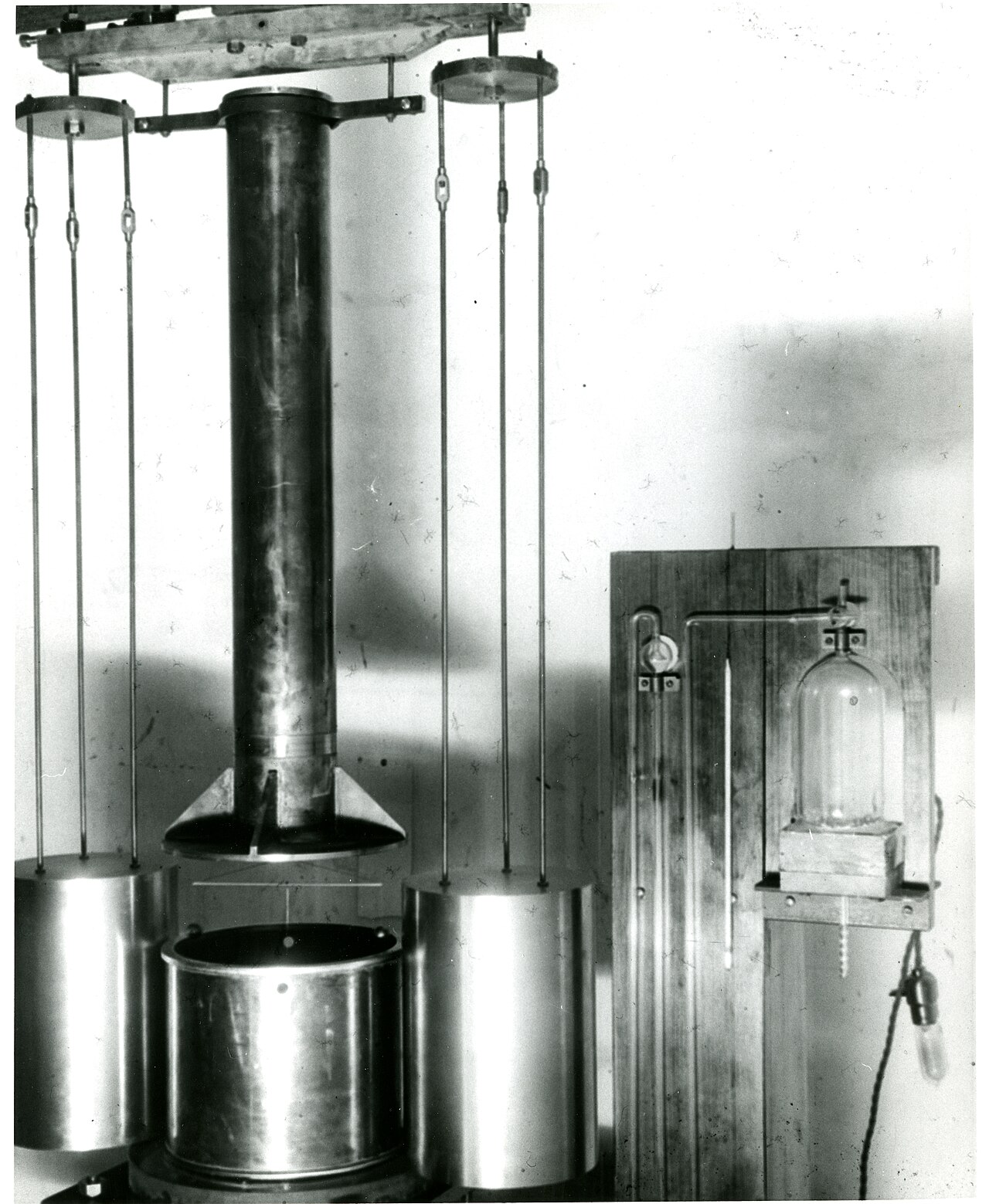
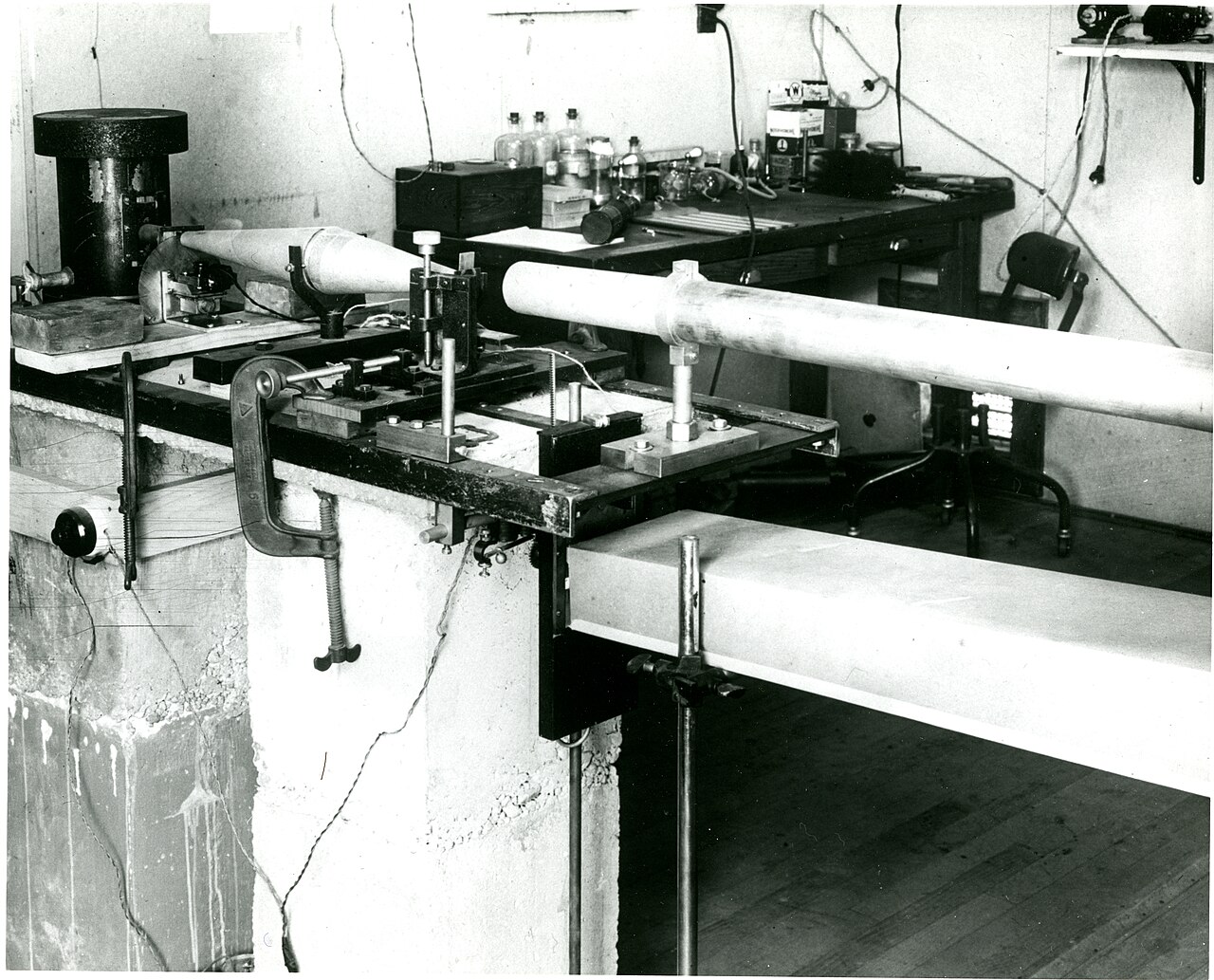
Determining the precise numerical value of G has proven far more difficult than one might expect for such a fundamental quantity. The core problem is that gravity is an extraordinarily weak force when compared to the other fundamental interactions at the scale of a laboratory experiment, making it inherently hard to isolate and measure with high precision. As a result, the measured value is known with certainty to only four significant digits. The modern notation of Newton's law explicitly featuring G was not introduced until the 1890s, when C. V. Boys formalized the expression. Nearly two centuries after Cavendish, the constant still resists measurement to more than four reliable digits.
Units and Physical Interpretation
The SI units of the gravitational constant, m³⋅kg⁻¹⋅s⁻², are not merely a bookkeeping exercise; they encode the physical meaning of G as a measure of gravity's strength throughout the universe. One natural rearrangement of those units is N/(kg²/m²), which reads as the force produced between two unit masses separated by a unit distance, reflecting the inverse-square dependence. A second arrangement, (m/s²)/(kg/m²), highlights the acceleration that a given mass density at a distance would impart to a test particle at a point in space. In geometrized natural unit systems such as Planck units and Stoney units, G is chosen as a defining constant, so its numerical value becomes exactly one or very close to one. However, because the measured value of G in terms of other fundamental constants still carries a relative uncertainty of about 2.2×10⁻⁵, that same level of imprecision propagates into every other quantity expressed within those unit systems, reminding us that even the most elegant frameworks inherit the limitations of experimental measurement.
Big G, Small g, and the Einstein Constant
In everyday physics, the gravitational constant is often called "Big G" to distinguish it from "small g," the local free-fall acceleration experienced at Earth's surface. The two are directly related: small g equals Big G multiplied by Earth's mass and divided by the square of Earth's radius, meaning the acceleration you feel standing on the ground is simply the universal constant scaled by the planet's own mass and size. In the realm of general relativity, a related but distinct quantity appears: the Einstein gravitational constant, denoted by lowercase kappa (κ). Einstein originally introduced κ into his field equations, where it multiplies the stress–energy tensor on the right-hand side. A common source of confusion is that the Einstein tensor, written Gμν, uses the same capital G as the gravitational constant, yet it is an entirely different mathematical object describing spacetime curvature.
Gallery
Frequently Asked Questions
What role does the gravitational constant play in physics?
G sets the overall strength of gravitational attraction, so it shows up in Newton's inverse-square law and again in Einstein's field equations of general relativity. Without it you could not compute anything from planetary orbits to the spacetime curvature around a black hole.
Why is the gravitational constant important to both Newton and Einstein?
In Newton's framework G is the proportionality factor that converts mass and separation into an actual force. In general relativity it reappears through the Einstein gravitational constant κ = 8πG/c⁴, tying matter-energy to the curvature of spacetime.
What other names does the gravitational constant go by?
You will encounter it as the universal gravitational constant, the Newtonian constant of gravitation, or the Cavendish constant in older literature. All three labels refer to the same symbol G and the same physical quantity.
More in Relativity And Gravitation 1-20
Spotted an error? Know more?
This is a living reference — every entry is fact-audited, and reader corrections feed straight into our audit queue. Suggest an edit · See this site's audit record