
Gravitational singularity
A point where spacetime breaks down catastrophically.

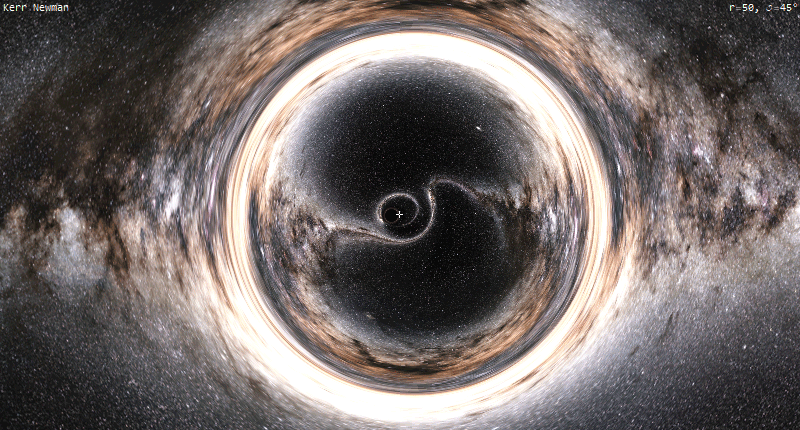
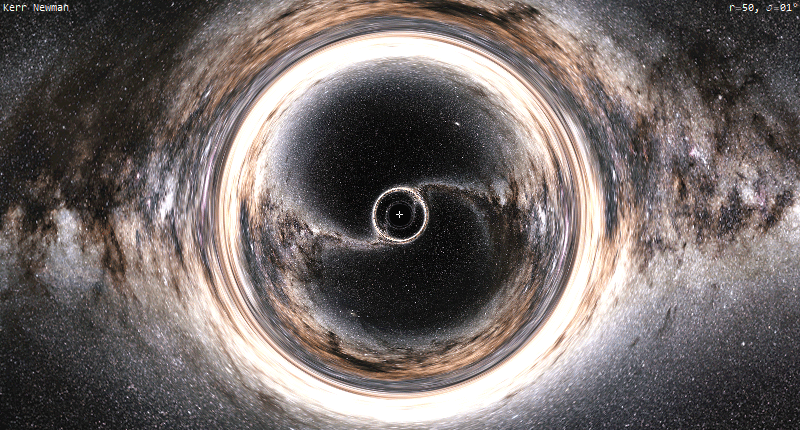
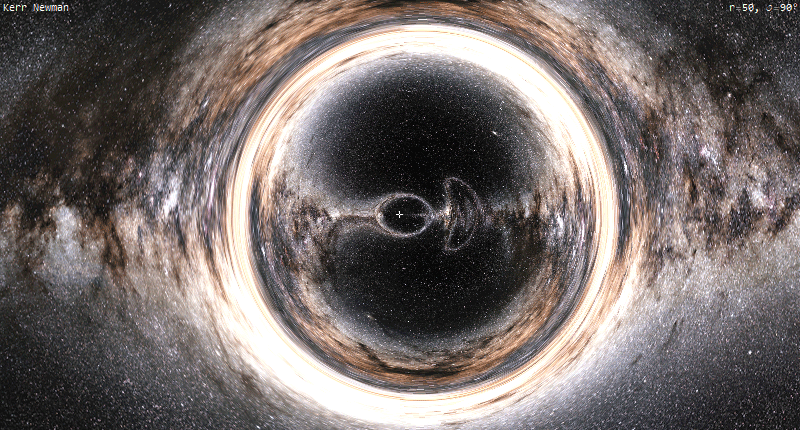
Yukterez (Simon Tyran, Vienna) . Source material for the Milky way background (a · CC BY-SA 4.0
A gravitational singularity, also known as a spacetime singularity, is a theoretical condition in which gravity becomes so intense that spacetime itself breaks down catastrophically. By definition, a singularity is no longer part of regular spacetime and cannot be determined by 'where' or 'when'. No complete and precise definition of singularities exists in general relativity, the current theory of gravity.
- field
- Theoretical physics, general relativity
- known_for
- Predicted breakdown of spacetime at black hole centers and the Big Bang's initial state
- type
- Theoretical condition
- key_feature
- Infinite curvature or incomplete geodesics
Lore & Background
Some theories, such as loop quantum gravity, suggest that singularities may not exist. There are also physicists, including Kip Thorne and Charles Misner, who believe that not all singularities can be resolved and that some likely still exist in the real universe despite quantum gravity effects. Others believe that singularities do not exist and that their existence in general relativity does not matter, since general relativity is already believed to be an incomplete theory.
Reader's Guide
Gravitational singularities represent a fundamental limit of general relativity, where the theory predicts its own breakdown. They are central to understanding black holes and the origin of the universe, but their existence remains disputed. The article notes that no complete and precise definition of singularities exists in general relativity, and that classical theories are not expected to be accurate under such extreme conditions. Quantum gravity effects, such as those proposed in loop quantum gravity or string theory, may resolve singularities, but some physicists believe singularities may still exist in reality. The concept also raises profound questions about causality, as rotating black holes could theoretically allow closed timelike curves, though quantum effects might prevent this. The ongoing debate about whether singularities are real or artifacts of incomplete theory highlights the need for a quantum theory of gravity.
Did You Know?
- A singularity is by definition no longer part of regular spacetime and cannot be determined by 'where' or 'when'.
- General relativity predicts that the initial state of the universe at the Big Bang was a singularity of infinite density and temperature.
- Some physicists, including Kip Thorne and Charles Misner, believe that not all singularities can be resolved and that some likely still exist in the real universe.
- The fuzzball model, based on string theory, models black holes using quantum microstates with no singularity or event horizon.
Defining the Unlocatable: What a Singularity Actually Is
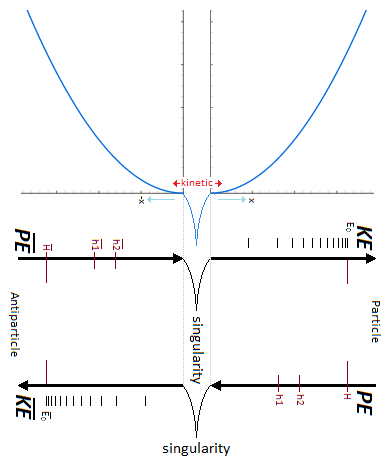
In the framework of general relativity, a gravitational singularity represents a condition where gravitational forces grow so extreme that the very fabric of spacetime ceases to function in any coherent way. Unlike singularities in classical field theories such as special relativity—where one can point to a specific location in a background spacetime where certain quantities become undefined—a singularity in general relativity is far more radical. Here, spacetime itself is the thing that breaks down, meaning the singularity no longer belongs to the regular manifold at all. It cannot be pinned to a 'where' or a 'when.' No single, universally accepted mathematical definition exists within the theory. Practitioners typically identify a singularity either by observing that a scalar curvature invariant diverges to infinity, or by noting that a geodesic, the path a free-falling object follows, terminates before reaching any finite endpoint. In many areas of physics, when equations predict unbounded growth, it is generally read as a signal that the theory is incomplete—much like the ultraviolet catastrophe in thermodynamics or the instability of the hydrogen atom predicted by the Larmor formula.
The Interior of a Black Hole: Point, Ring, and the Fate of Infalling Matter
General relativity predicts that once an object collapses past its Schwarzschild radius, a black hole forms with a singularity at its core. For a non-rotating, uncharged black hole, this singularity is a single point of zero volume containing all the mass, implying infinite density. In a rotating black hole, the singularity is stretched into a ring lying in the plane of rotation, again with zero volume. Because the singularity sits behind an event horizon, it never appears in the causal past of any external observer, making it impossible to objectively confirm that it has formed. An observer who crosses the horizon of a Schwarzschild black hole is inexorably drawn inward. Tidal forces grow without bound, tearing the body apart in a process colloquially called spaghettification, before the matter is compressed into an infinitely small point. In an unperturbed model the interior curves smoothly toward that point, but any infalling matter or radiation introduces perturbations that cause space to oscillate chaotically near the singularity, subjecting the infalling material to rapidly shifting tidal forces while it is squeezed into ever-smaller volumes.
Exotic Paths: Wormholes, Time Loops, and the Debate Over Existence
For charged or rotating black holes, the mathematical solutions of general relativity open up stranger possibilities. Extending these solutions to their limits reveals a hypothetical route through the black hole into an entirely different spacetime, effectively turning the black hole into a wormhole. The same extended geometry also appears to permit closed timelike curves around the Kerr singularity, which would allow an observer to return to their own past and generate causality paradoxes such as the grandfather paradox. In practice, any perturbation would likely destroy the wormhole pathway, and processes such as mass inflation or quantum gravity effects may prevent closed timelike curves from ever forming. Beyond these exotic scenarios, the physics community remains deeply divided on whether singularities exist at all. Some researchers argue that their appearance signals a breakdown of general relativity and demands a quantum theory of gravity. Others, including Kip Thorne and Charles Misner, contend that some singularities probably survive even after quantum effects are included. A third camp holds that the question is moot because general relativity is already known to be incomplete, and still others believe the singularities can be resolved within the existing framework without invoking new physics.
The Big Bang and the Quantum Boundary
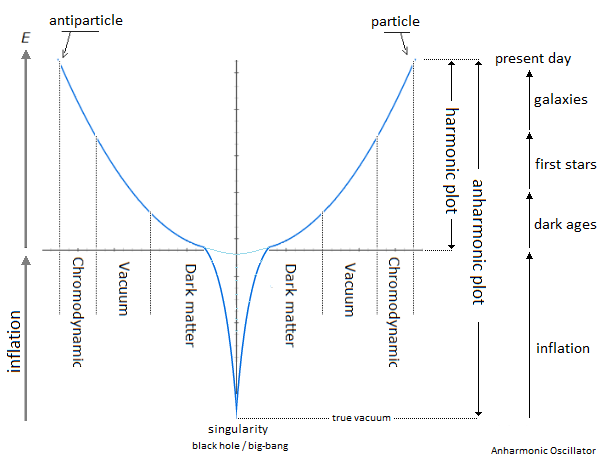
General relativity also points to a singularity at the very beginning of the universe: the initial state of the Big Bang, characterized by infinite density and temperature. However, physicists widely acknowledge that classical gravitational theories are not expected to remain valid under such extreme conditions. A quantum description is almost certainly required to make sense of the earliest moments. One concrete illustration of why classical physics fails here comes from quantum mechanics itself: the theory does not permit a particle to occupy a region of space smaller than its Compton wavelength, which sets a natural lower bound on localization. This kind of quantum constraint suggests that the infinite compression predicted by classical general relativity cannot be taken literally. The broader pattern is familiar across physics. Whenever a theory's equations predict unbounded quantities—whether in the ultraviolet catastrophe of classical thermodynamics, in the need for re-normalization in quantum field theory, or in the Larmor formula's prediction of an unstable hydrogen atom—physicists generally interpret the divergence as a marker of a missing piece in the underlying description. The gravitational singularity, in this light, is less a physical object and more a boundary marking the edge of where current classical theory can be trusted.
Gallery
Frequently Asked Questions
What is a gravitational singularity?
A gravitational singularity is a theoretical condition in which gravity grows so extreme that the very structure of spacetime ceases to function. At such a point, the usual notions of location and time lose their meaning, and the smooth geometry described by general relativity breaks down entirely.
Where do gravitational singularities appear in established physics?
They are predicted at the centers of black holes and at the initial state of the Big Bang. In both scenarios, the equations of general relativity drive curvature toward infinity, signaling that the theory has reached the edge of its own applicability.
Why can't physicists give a single precise definition of a singularity?
Because a singularity is, by definition, no longer part of regular spacetime, it cannot be located with coordinates or described by finite physical quantities. General relativity currently offers no complete, unambiguous definition; instead, singularities are recognized through indirect signs such as infinite curvature or geodesics that end abruptly.
What is the key mathematical signature that identifies a gravitational singularity?
The hallmark is either infinite spacetime curvature or the existence of incomplete geodesics—paths of free particles that terminate after a finite proper time without reaching any boundary. Either feature indicates that the smooth manifold on which general relativity is built has failed.
Why is the gravitational singularity concept important to the broader field of physics?
It marks the precise boundary where general relativity stops being predictive, strongly implying that a quantum theory of gravity is required to describe what truly happens there. Resolving the singularity problem is therefore one of the central open challenges in theoretical physics.
More in Relativity And Gravitation 1-20
Spotted an error? Know more?
This is a living reference — every entry is fact-audited, and reader corrections feed straight into our audit queue. Suggest an edit · See this site's audit record