
Gravitational time dilation
Time passes slower nearer a massive body.

Prokaryotic Caspase Homolog · CC BY-SA 4.0
Gravitational time dilation is a form of time dilation, an actual difference of elapsed time between two events as measured by observers situated at varying distances from a gravitating mass. It was first described by Albert Einstein in 1907 as a consequence of special relativity in accelerated frames of reference, and later incorporated into general relativity.
- first_described_by
- Albert Einstein
- year_first_described
- 1907
- first_confirmed_by
- Pound–Rebka experiment
- field
- General relativity
- key_effect
- Clocks closer to a gravitating mass run slower
Lore & Background
Gravitational time dilation is a difference in the passage of proper time at different positions as described by a metric tensor of spacetime. The lower the gravitational potential (the closer the clock is to the source of gravitation), the slower time passes, speeding up as the gravitational potential increases. This effect has been demonstrated by noting that atomic clocks at differing altitudes will eventually show different times, with differences measured in nanoseconds. Relative to Earth's age in billions of years, Earth's core is in effect 2.5 years younger than its surface.
Reader's Guide
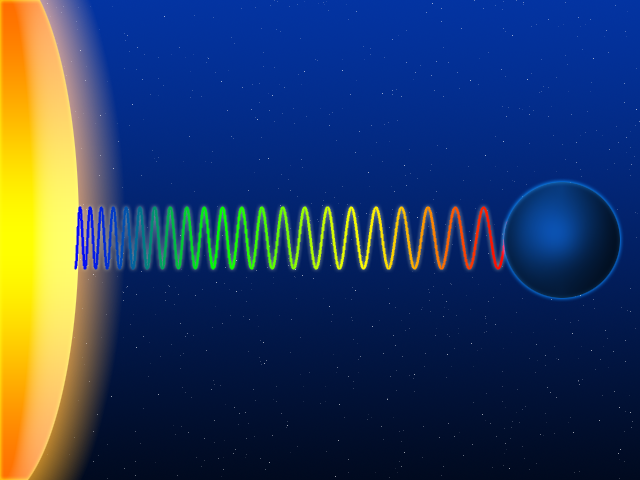
Gravitational time dilation is closely related to gravitational redshift, in which the closer a body emitting light of constant frequency is to a gravitating body, the more its time is slowed, and the lower (more 'redshifted') the frequency of the emitted light would seem to a fixed observer. Demonstrating larger effects would require measurements at greater distances from Earth or a larger gravitational source.
Did You Know?
- Gravitational time dilation was first described by Albert Einstein in 1907 as a consequence of special relativity in accelerated frames of reference.
- Relative to Earth's age in billions of years, Earth's core is in effect 2.5 years younger than its surface.
Theoretical Origins and Einstein's Vision
Gravitational time dilation traces its intellectual roots to Albert Einstein's 1907 work, where he identified the effect as a natural consequence of special relativity applied to accelerated frames of reference. In that early formulation, the phenomenon emerged from the deep equivalence between acceleration and gravity. Later, within the full architecture of general relativity, gravitational time dilation was reinterpreted as a genuine difference in the passage of proper time at different spatial positions, encoded mathematically in the metric tensor of spacetime. This shift in perspective transformed the effect from a kinematic curiosity into a geometric property of the universe itself. The core principle remains straightforward: the lower the gravitational potential—meaning the closer a clock sits to the source of gravitation—the slower time elapses for that clock. Conversely, as gravitational potential increases and the clock moves farther from the mass, time speeds up. Einstein's original prediction has since been validated through multiple experimental tests of general relativity, cementing gravitational time dilation as one of the most firmly established consequences of modern physics.
Experimental Confirmation and Measurable Magnitudes
Subsequent refinements, including the Gravity Probe A mission, further tightened the experimental constraints and reinforced the theoretical predictions. On Earth, the most accessible demonstration involves placing atomic clocks at different altitudes, where the varying gravitational potential produces tiny but detectable discrepancies in elapsed time. These Earth-bound measurements yield differences on the order of nanoseconds, reflecting the relatively modest strength of our planet's gravitational field. Even more striking, Earth's core is effectively 2.5 years younger than its surface when the entire geological history is taken into account. Observing substantially larger time-dilation effects would demand either measurements taken at much greater distances from Earth or the presence of a far more massive gravitational source.
Mathematical Framework and the Equivalence Principle
The quantitative description of gravitational time dilation rests on the equivalence principle, which asserts that inertial mass and gravitational mass are identical and that any uniformly accelerated reference frame is physically indistinguishable from a gravitational field of equivalent strength. In this framework, consider a vertical line of observers—perhaps arranged along a long accelerating spacecraft, a skyscraper, or a planetary shaft—each experiencing a distinct constant g-force directed along that line. The total time dilation at height h relative to a base observer at h = 0 is given by an exponential of the integral of g(h') divided by c², integrated from 0 to h. In the special case of Rindler observers in flat spacetime, where g(h) equals c² divided by (H + h) for a constant H, the expression simplifies elegantly to the ratio (H + h)/H. For the common weak-field scenario where the product gh is much smaller than c², a linear approximation yields T_d approximately equal to 1 + gh/c², capturing the small fractional shift in elapsed time that underlies all terrestrial measurements.
Gravitational Redshift as a Twin Phenomenon
Gravitational time dilation and gravitational redshift are two facets of the same underlying phenomenon. When a body emitting light of a fixed intrinsic frequency sits closer to a massive gravitating object, its local time runs slower relative to a distant observer. Because the emitted wave crests are produced at a slower local rate, the frequency measured by a fixed observer farther from the mass appears lower—shifted toward the red end of the spectrum. In other words, the very slowing of time near the gravitating source stretches the wavelength of outgoing radiation as seen from above. This intimate link means that any experimental confirmation of gravitational redshift simultaneously validates gravitational time dilation, and vice versa. The effect, while minuscule on human timescales, accumulates over geological epochs: across Earth's 4.6-billion-year existence, the cumulative redshift and time-dilation between the core and the surface amount to roughly 2.5 years of differential aging.
Gallery
Frequently Asked Questions
Who is Gravitational time dilation?
It is a phenomenon first articulated by Albert Einstein in 1907, originally as a consequence of special relativity in accelerated frames, before being fully woven into general relativity. Think of it as the recurring 'character' that appears whenever you need to explain why clocks tick at different rates depending on where they sit in a gravitational field.
What are Gravitational time dilation's powers/role?
Its core ability is straightforward: the closer a clock sits to a gravitating mass, the slower it ticks relative to one farther away. This means two observers at different gravitational potentials will genuinely disagree on how much time has elapsed between the same pair of events.
Why is Gravitational time dilation important?
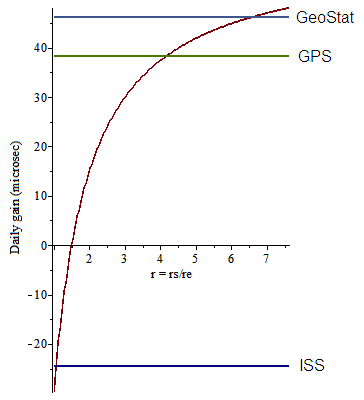
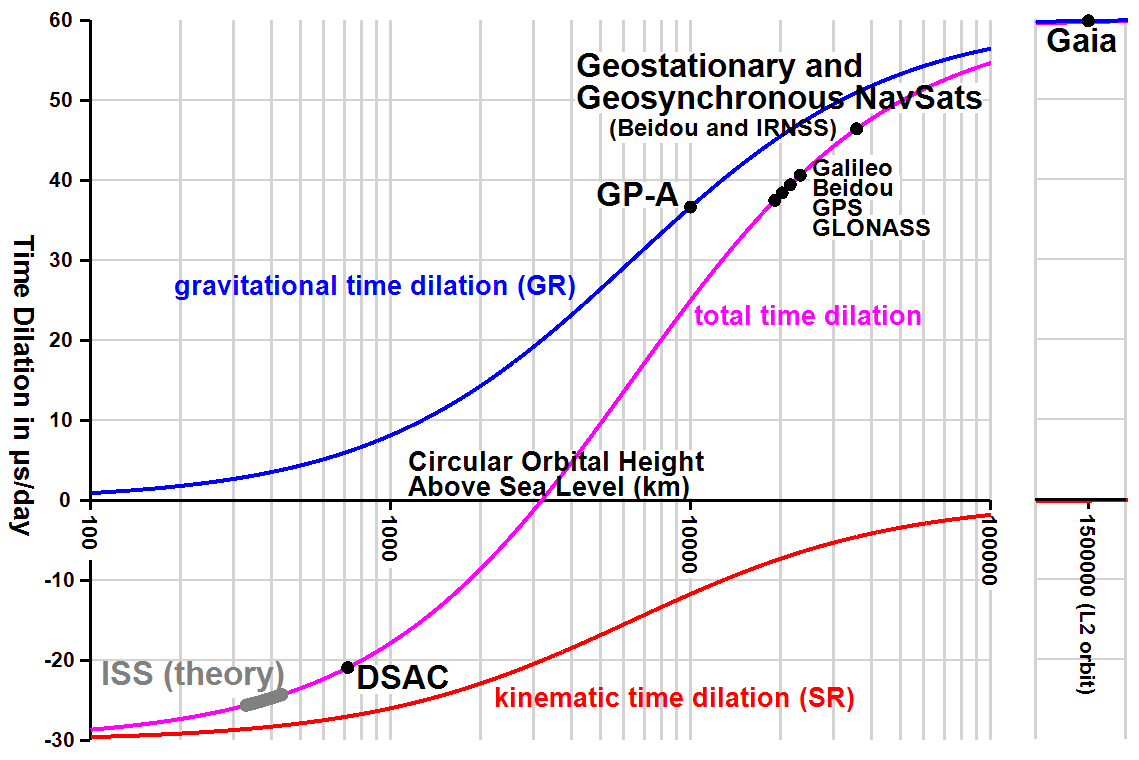
It is a cornerstone of general relativity and has practical consequences for technologies like GPS, where satellite clocks must be corrected because they tick faster than ground-based ones. Without accounting for it, navigational errors would accumulate rapidly.
When was Gravitational time dilation first introduced?
Einstein laid out the idea in 1907 as a natural consequence of special relativity applied to accelerated reference frames. It was later absorbed into the full framework of general relativity once that theory was completed.
More in Relativity And Gravitation 1-20
Spotted an error? Know more?
This is a living reference — every entry is fact-audited, and reader corrections feed straight into our audit queue. Suggest an edit · See this site's audit record